
Warning: This article represents the personal opinion of one admin and has nothing to do with the other admins.
——
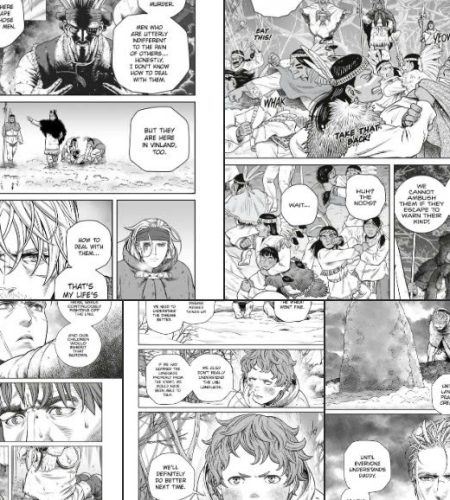
Since I happen to have two leisurely hours to spare and am feeling a little irritated, I want to clarify a particular issue that I personally see in the ending of Vinland Saga. Essentially, I believe that Vinland Saga, for-some-reason-or-another, decided to write and arrange the events at the end of the Vinland arc in such a way as to convey/emphasize a particular problem that leads to war, along with a solution to that very problem, which the series itself does not even seem capable of believing in, while deliberately turning a blind eye to the details it had so plainly drawn out from the very beginning, even though those details had already raised a much more precise issue.
First of all, Vinland Saga ends with Thorfinn's failure to establish a fully realized Vinland, and then uses Karli's words, along with Thorfinn's dream of a "Thousand-Year Voyage," to imply that the fundamental reason behind the failure to "build a land/society without war" is actually that human beings have not been patient enough, and that they have become so deeply overwhelmed by fear that they have failed to make an effort to understand one another and thereby live in peace. The series suggests that human beings need to learn, that they need to be patiently taught for a sufficiently long time—something like a thousand years or whatever—to understand Thorfinn's reasoning. Thus, what is fundamentally flawed is not Thorfinn's ideal or his method of "completely severing all ties with violence," but merely the fact that the people around him were too ignorant to believe in that method and ended up ruining everything, causing his plan to fail.
But in what sense, exactly, were those people ignorant? Here, the supposedly mistaken choices made by the Norse side consist of the following: (1) They (Ivar) demonstrated to the Lnu that they possessed the ability to harm them with a sword if they so wished; (2) the Norse built a defensive fortification, thereby making it clear to the Lnu that neither side trusted the other enough to be certain that they could avoid a war breaking out once mutual suspicion arose between them; and (3) the Norse stubbornly refused to withdraw even after learning that the disease they had brought with them would certainly be capable of easily killing the Lnu, so long as the Norse chose to go out and interact with them—a possibility that the Lnu no longer trusted the Norse enough to rule out. All of these factors combined to precipitate a war that broke out not because either side wanted war, but because the two sides had failed to understand one another.
Therefore, the solution proposed by Thorfinn is to eliminate the disparity in power by finding a cure for the disease, thereby reducing the suspicion, wariness, and sense of danger that the Lnu perceive in the Norse. Karli, that supposedly genius child or whatever who is expected to carry on his father's path, also agrees that, yeah, the disease is a problem, while proposing an additional solution: overcoming the language barrier so as to minimize, as much as possible, the negative subjective interpretations that the two sides form of one another.
The series puts forward the claim that the war which marked the beginning of Thorfinn's failure was a war born out of mistaken hostility, meaning that it is essentially saying that, had the Lnu not been driven by the disease and their suspicion of the sword, they would not have initiated an attack against the Norse—or at least, that is the speculation of Styrk, aka someone who supports war. And this is not really a case of Thorfinn taking a gamble, mind you. It's not as though he just happened to stumble upon a land whose inhabitants had no desire to expand their influence or reshape the world according to their own wishes, because among the Lnu there are IN FACT A GREAT MANY warriors who harbor precisely such ambitions. Yet, even so, the belief that the Lnu would not initiate a war still has a reasonable basis.
That is because the Lnu have a tradition of living together in accordance with the ongoing development of the natural world around them, rather than attempting to excavate and reshape nature according to their own wishes. I personally don't have the knowledge to explain why-exactly-this-is-the-case, but the mere existence of such a tradition is already enough to ensure that, in a community of Lnu people who have no desire to create conflict, even if there exist a few individuals who do harbor such a desire, those individuals will naturally form the impression that everyone around them has no desire to create conflict, and that they alone are the ones who want it. Even though, during the final meeting between Thorfinn's group and the Lnu faction preparing for battle, we learn that a great, great many Lnu had actually wanted to attack the Norse and seize their weapons from the very beginning (and that the very idea of possessing those weapons even led the Lnu men to fight among themselves, to the point that they forgot about the threat posed by the Norse, which was supposed to be their primary concern), it was only with the emergence of the disease and the sword on the Norse side that those conflict-seeking individuals could come to believe that, yeah, all those people around them who supposedly "disliked conflict" would now also have to choose conflict just as they themselves would, and decide to launch an attack.
Had the outbreak of the disease never occurred in the first place, gradually exposing the fact that beneath the veil of a tradition of mutual understanding—which had generalized the Lnu into a collective of people who supposedly all lacked any desire to create conflict—there had always existed, among these Lnu who had lived together in intimate equality, a great many individuals who shared the same desire for conflict, then those Lnu warriors most likely would not have dared to unilaterally propose invading the Norse to seize their resources. After all, what if the person to whom they proposed such a thing actually turned out to hold a mindset completely opposite to their own—just as the generalized image imposed upon the Lnu would suggest—and kicked them out of the community out of fear that they would ruin this peaceful way of life? (Kind of like how Thorfinn demanded that Ivar's sword be broken down and turned into a sickle, lol.)
In contrast to the generalized image of Norse men, which makes every single one of them fearful and suspicious that the others harbor-a-desire-to-create-conflict in order to change the existing order, the generalized image of the Lnu leads them to trust that everyone around them dislikes conflict and merely wishes to preserve the existing order. Therefore, if we consider only Thorfinn's method of preventing war and protecting Vinland before the conflict broke out, then it was entirely reasonable, and there were legitimate grounds for believing that this method would work, rather than it being a mere matter of luck. In other words, even if we were to eliminate every external variable and consider only the relationship between the Lnu and the Norse, Thorfinn's approach would still have had genuine prospects of success under those circumstances. But once the disease broke out and that veil had disappeared, continuing to cling to the idea of preventing misunderstandings born out of suspicion no longer made any sense.
One thing to note here is that the fear arising from the Lnu's "misunderstanding" of the Norse was merely a condition that led the Lnu to eliminate all misunderstandings about one another's true nature. As explained earlier, individuals perceive the people around them through their own impressions and subjective interpretations. Initially, the Lnu did not misunderstand the Norse—that is, they regarded the Norse as people who did not desire conflict, and indeed, the majority of the Norse living in Vinland genuinely had no desire for conflict. However, they did misunderstand their own kind—individual Lnu believed that every other Lnu had no desire for conflict, when in reality, a great many of them very much wanted conflict but were unable to find allies precisely because of this misunderstanding. The fact that the Lnu did not misunderstand the Norse was what sustained the misunderstanding among the Lnu themselves, thereby preserving peace. At this point, not-misunderstanding the Norse was merely what sustained the misunderstanding among the Lnu, and it was precisely this misunderstanding among the Lnu that prevented their warriors from unilaterally attacking the people on the Vinland side. Since the original purpose of preventing misunderstandings between the Norse and the Lnu was to preserve the misunderstanding within the Lnu themselves, once even that internal misunderstanding ceased to exist, attempting to rebuild the project by finding a cure or finding ways for the two sides to interact with one another would no longer serve any meaningful purpose.
Now that this misunderstanding has disappeared and a competition for power built upon warfare has taken root among the Lnu, they will once again follow in the footsteps of the Vikings from the North. And just like the Vikings, they will impose a new veil of generalization upon one another, except that instead of generalizing that everyone among their own kind desires peace, this time it will be that everyone-among-their-own-kind-desires-conflict. Even if the future does unfold exactly as Thorfinn suggests, and after the Norse have withdrawn for a long period to search for a cure, the Lnu might indeed gradually forget their resentment over the battle of the past, the problem that leads to war will no longer be merely a matter of resentment being directed toward the wrong target. By this point, an imbalance of power, suspicion, and fear will already have been introduced into Lnu society, making it impossible for that society to ever return to its original, unadulterated state. Suspicion and the hostility born from suspicion are merely secondary issues. Even if new children who dislike conflict are born, they too will form the impression that the Lnu society surrounding them is filled with suspicion, and, much like the "not manly enough" men of Norse society such as Ketil, they will be too afraid to choose the path of avoiding conflict.
Umm, then, is there maaaybe some way to get people to actually understand one another, so that they can stop judging one another through that veil of generalization? Like, umm, just as the conflict-loving Lnu were able to discover one another's true nature thanks to the existence of a common enemy, could this process somehow be reversed if there were a "common friend" instead, allowing the Lnu who dislike conflict to discover one another? I-I don't know, but even if such a method really does exist, it is certainly not the method proposed by Karli, who serves as the one who verbally articulates the future direction of the Thousand-Year Voyage that his father is about to embark upon. Because all he proposes is a way to overcome the language barrier, which means that his proposal rests on the premise that, if the barrier can be eliminated, human beings will be able to communicate authentically with one another. But this assumption holds true only for the former Lnu society, a society in which individuals always regarded one another as people who would never choose conflict. Now, however, Lnu society has become one in which individuals always regard one another as people who might choose conflict at any moment, and even those who despise conflict will no longer dare to communicate authentically and straightforwardly. After all, what if hundreds of other conflict-loving guys, upon discovering that you're harmless, decide to rush in and tear you apart? Fundamentally, this new veil of generalization, one characterized by mutual suspicion, is far more difficult to dismantle than the one that existed before.
That is what I find so laughable, and also what makes me believe that Vinland Saga is presenting a conclusion that the series itself does not even believe in. Because the series itself has already portrayed the dynamics within Lnu society in precisely this way, and has already shown Thorfinn witnessing how Kaoquaji's (I don't remember how to spell his name) warlike tribe began changing the very way Lnu society operated, transforming it into something resembling the Norse-European society that Thorfinn himself had chosen to abandon because it was beyond-all-hope-of-salvation. Thorfinn even came to accept that he would never be able to escape those who love war/conflict, or the veil of generalization that they inevitably bring with them and cast over everyone else. He literally opened his mouth and declared that dealing with the problem of those who desire conflict was his life's mission. And yet the series ends in a way that essentially shits all over every single one of those things?
So personally, whenever I analyze the core values of Vinland Saga, I always disregard its vision of a "Thousand-Year Voyage to build a peaceful land" because I find it fucking ridiculous. I don't think Vinland Saga, as it is currently presented, actually knows, or even believes that it knows, any method by which an outsider could actively build a peaceful land where people LIKE ARNHEID, LIKE EINAR could live.
Personally, judging by how Thorfinn ultimately still chooses to cling to the inherent wrongness of conflict as his reason for refusing to engage in conflict, even when doing so might be "necessary," I believe that what the series really wanted to write about was the fact that, regardless of whether an individual was originally the aggressor or the victim when a conflict first broke out between two sides, because both sides are made up of human beings, once war begins, the notion of what rightfully-belongs-to-oneself no longer depends on who originally possessed it, and so both sides will come to desire victory just the same. Therefore, as Thorfinn says, "Victory in this war will only mark the beginning of an even longer war that our descendants will inherit." No matter how much Arnheid or Einar have suffered, or how much they might "deserve to achieve victory" because they "were the ones who were wronged in the first place," they still should not throw themselves into the war, but should instead simply leave everything behind and walk away.
I mean, that's a perfectly fine message to write about, and I think the series' attempt to convey such a message was reflected in Einar's realization about the so-called war-of-no-choice. BUT the very nature of Einar's anguish—the thing that made him want to break away from the war, yet prevented him from doing so because he had already sacrificed too much for it—is an anguish that NOT EVERY SINGLE PERSON EXPERIENCES. What tormented him was the fact that he had been forced to kill another human being. DOES THE AVERAGE HUMAN BEING REALLY CHOOSE TO GIVE UP SOMETHING THEY BELIEVE THEY RIGHTFULLY DESERVE TO HAVE IN A WAR SIMPLY BECAUSE OBTAINING IT WOULD REQUIRE KILLING SOMEONE? I deeply appreciate people like Einar, but such a deeply personal form of anguish should never be used as evidence to establish the existence of some universal human anguish. If other people do not experience that same anguish, does that mean they should just continue fighting the war? Vinland Saga says no, explicitly having Einar acknowledge that this war is a vicious cycle, yet it fails to portray the endless suffering that most human beings would experience within such a cycle, focusing instead solely on depicting Einar's guilt.
Perhaps portraying that complicated process would have taken too long, so Yukimura-sensei simply gave up, since, after all, he did say that he had been wanting to take a break for quite some time during his conversation with Gigguk back in 2023. But I don't particularly care about that. A bad ending is a bad ending, and this one is bad in a way that makes it feel as though the series is trying to convince its readers with half-hearted words of comfort and encouragement that the series itself doesn't even believe in.
https://www.facebook.com/share/p/19V6x1xfAt/?mibextid=wwXIfr
Subscribe to our email newsletter to get the latest posts delivered right to your email.
Truyện bị bó sử (Thorfinn chắc chắn thất bại), mà lý tưởng của Thorfinn kiểu quá "cao thượng" so với thời đó nên nói chung không khó để dự đoán kết sẽ xịt
View on Facebook
Nguyễn Tất Thắng Thorfinn không cần thành công ở Vinland để được chứng minh là đúng, nó thậm chí không cần thành công theo hướng xây dựng được một quốc gia hòa bình trong tương lai xa để đúng. Có cách chứng minh khác, nhưng Vinland làm không nổi thì phải?
View on Facebook
Vinland Saga Viet Nam Fanpage Hình như theo sử là sau Thorfinn vẫn quay lại định cư tại Greenland (vẫn tương đối là 1 vùng đất "mới). Nếu cho Thorfinn đạt được lý tưởng ở đó thì có lẽ sẽ hợp lý hơn?
View on Facebook
Vinland Saga Viet Nam Fanpage cơ bản là nếu làm theo sử, và theo tích hợp lý của đời thực, thì làm sao thành công "xây dựng được một quốc gia hòa bình trong tương lai xa" nếu hoàn toàn tránh việc đụng độ, binh đao, đổ máu ?
Lịch sử đã chứng minh là muốn có hòa bình, thì phải đổ máu trước đó, rất nhiều máu :v
View on Facebook
Phong Le Do Tuan Dude t đã bảo nó không cần phải “thành công xây dựng được quốc gia hòa bình” để lý tưởng của Thorfinn được chứng minh đúng mà? Tức là dù kết quả nó có không thành công thì lý tưởng của Thorfinn vẫn có thể đúng.
View on Facebook
Vinland Saga Viet Nam Fanpage ý tôi là kể cả thực tế mấy ngàn năm đến giờ thì lý tưởng của Thorfinn vẫn cho thấy ko thể thành hiện thực à :V tác giả kiểu cũng nhận thấy như thế nên là cho nó theo thực tế luôn.
View on Facebook
Phong Le Do Tuan Ờ thật ra t nghĩ lý tưởng của Thorfinn thiên về khuyên con người rũ bỏ vị kỷ, một cách cá nhân, và cái vùng đất hòa bình là thứ được bị động tạo ra như một hệ quả của việc mọi người rũ bỏ được vị kỷ hơn là nó muốn chủ động tạo ra một vùng đất hòa bình, trong khi con người vẫn đầy rẫy vị kỷ, đầy rẫy thứ khao khát được yêu không đáy mà Canute nói là đã khiến con người rơi khỏi thiên đàng. Đọc post trong album con đường Canute + Thorfinn là hiểu nha. Cơ mà thể hiện cái này nó khá là khó, không làm trong một hai chương được, nên kết VS nhiều cái đấu đá nhau lắm vì ngay cả cái lý tưởng cốt lõi cũng không thể hiện được nên t mới chê đây.
View on Facebook
klq nhưng kèo Thorfin lúc trưởng thành với Thorkell thì ae đánh giá sao, nếu không tính Thors ra thì đây chắc là 2 nhân vật mạnh nhất bộ truyện ấy nhỉ
View on Facebook
Thach Nguyen Hồi nhỏ Thorfinn đã xin được ngón Thorkell rồi thì chắc Thorfinn sau mạnh hơn
View on Facebook
Nguyễn Tất Thắng nah, thorfin ko giết người lâu rồi, đánh có biq hơn nhưng khó mà như xưa, như xưa là muốn lấy mạng
View on Facebook
thất bại là mẹ thành công
View on Facebook
thorfinn thất bại là vì cậu đã không chịu thay đổi cái tôi để phù hợp với thực tại,nga từ khi đặt chân đến vinland trong đầu thorfinn luôn đinh ninh rằng quy tắc cha mình đặt ra là đúng,không chịu thay đổi đến khi quá muộn.
Kết thúc mở này làm tôi suy nghĩ đến việc thay đổi cái tôi để phù hợp với tình huống,tức là không có 1 cái tôi cụ thể/không có 1 quy tắc cụ thể nào cả mà phải tự phân tích tùy theo hiện tại,
nó cũng làm tôi ngẫm lại câu nói "tôi không có kẻ thù",không có không phải là không có kẻ thù mà là không có 1 cái tôi cụ thể để giữ hận thù.
View on Facebook
Mình thấy cái kết rất phù hợp cho bối cảnh thời kỳ Bắc Âu. Việc cta tiếc nuối ở đây là không thấy được thorfinn xây dựng được một vùng đất hòa bình để cta nhìn thấy được một câu trả lời cụ thể hơn . Về cơ bản nó sẽ truyền tải nhiều hơn là đưa một cái kết viễn mãn cho cta , thứ truyền tải ở là gieo mầm và duy trì . Không biết anh em ra sao nhưng kiểu m nghe nhiều sử Việt và gần hơn với thệ hệ bây giờ là thời kháng chiến xong được đọc cái kết của vinland khiến m thấy mình càng hiểu ra 1 cái gì đó từ cả hành trình của thorfinn lẫn cả cái hướng kết thúc của bộ truyện, hiểu hơn về quyết định của thorfinn khi đồng ý rút lui khỏi cuộc chiến. Cách thorfinn gieo mầm cũng rất hay trong cái kết, quyết định tặng lại số hạt lúa cho anh chàng người Lnu và cái bắt tay của hai người bạn và ngài trưởng lão thật sự quá peak đến nỗi m ko nghĩ thorfinn đã thất bại trong việc xây dựng vinland mà đang hình thành nó . Cả hai người phiên dịch cho cả hai bên nữa, bằng một cách nào đó 2 người hiểu nhau và chọn đến với nhau , cho thấy con người dù khác biệt về văn hóa hay sắc tộc vẫn có thể kết nối và thấu hiểu nhau. Nói chung thì m thấy tác giả cho một cái kết điện ảnh vl ý
View on Facebook
Bách Lê Ờm bản thân bài viết đang không chỉ trích việc Thorfinn hiện tại đã thất bại trong việc xây dựng nên Vinland mà đang bảo cái thứ gọi là "gieo mầm" để "thúc đẩy thế hệ sau này tiếp bước mình xây dựng" đó nó đang dựa trên một lý lẽ nền tảng phi lý lắm ấy?
View on Facebook
Vinland Saga Viet Nam Fanpage việc thorfinn thất bại trong việc tạo dựng theo hướng cụ thể hóa là đúng. Gieo mầm ở đây nếu mà thúc đẩy xây dựng nên vùng đất như thorfinn hướng tới thì nó sẽ phi lý nhưng mà để làm nền tảng cho việc xã hội hóa dựa trên tư tưởng thorfinn là có.
View on Facebook
Bách Lê Bạn nói thử xem đó là tư tưởng gì cơ? Nếu bảo là tư tưởng tránh bạo lực nhưng vẫn giữ được hoà bình bằng phương thức giao tiếp, nói chuyện thì trên bài đã nói rõ vì sao nó vô lý rồi.
View on Facebook
Vinland Saga Viet Nam Fanpage Nếu để nói tư tưởng của thorfinn là tránh bạo lực thì hơi chung chung. Nó sẽ là tìm giải pháp để ngăn chặn xung đột thông qua việc giao tiếp để tạo sự kết nối thì sẽ rõ hơn. Trên bài chỉ nói về những biến số ngẫu nhiên theo hướng tự nhiên và những biến số như dịch bệnh hoặc đối lập tư tưởng về văn hoá cũng như nỗi sợ hãi, nghi ngờ với nhau . Nếu như ad nói thì nó sẽ ko hợp lý trong bối cảnh đó và với nền văn hoá thô sơ của người Lnu hơn là vô lý. Bản chất tư tưởng thorfinn đúng thật thì nó sẽ khó thực hiện hoàn toàn khi mà không có trật tự rõ ràng, phân chia như vua canute. Nhưng nó vẫn là một trong những tư tưởng góp phần trong việc xã hội hoá như m đã nói. Cơ bản tư tưởng thorfinn nó ko hoàn toàn vô lý nó chỉ chưa đủ tính chặt chẽ thôi .
View on Facebook
Bách Lê Nếu tham vọng truyện chỉ có đến vậy thì ngay từ đầu truyện đã dừng với lý tưởng của Canute chứ không có đặt Thorfinn làm đối trọng làm gì đâu á bạn ơi. Nếu có thể nói chuyện được thì tốt quá, nếu chỉ cần có như thế thì Thorfinn đã làm được với đám đàn ông Bắc Âu vì hai bên không có bất đồng ngôn ngữ rồi. Nhưng vấn đề giao tiếp không nằm ở rào cản mà nằm ở việc người ta éo tin là những lời nhau nói là sự thật, vậy nên từ đầu Thorfinn mới chọn đến Vinland và bỏ cuộc việc cố gắng nói chuyện với dân Bắc ÂU, vì dân Lnu vốn luôn tin tưởng người họ coi là đồng bào và chưa bị chiến tranh vấy bẩn (cái này mình đã nói kỹ trên bài). Vậy nên ngược lại với những gì bạn nói, bài của minh nói rằng TƯ TƯỞNG CỦA THORFINN CHỈ THỰC HIỆN ĐƯỢC KHI NỀN VĂN HOÁ CỦA NGƯỜI LNU CÒN THÔ SƠ NHƯ TRƯỚC, KHI HỌ CÒN TRUYỀN THỐNG TIN RẰNG AI CŨNG GHÉT XUNG ĐỘT VÀ SỐNG CÙNG NHAU ĂN CÙNG NHAU NHƯ TRƯỚC KIA THÔI. Sau vụ thất bại và đám chiến binh Lnu lên nắm đầu thì hint là xã hội Lnu đã thay đổi theo hướng giống người Bắc ÂU rồi
View on Facebook
Vinland Saga Viet Nam Fanpage Thật ra lý tưởng của thorfinn và canute hoàn toàn giống nhau đều hướng tới hoà bình nhưng cách thức khác nhau. Thorfinn thiên hướng về sự phóng khoáng với niệm tin ngây thơ về một nơi bình đẳng chung sống hơn và nó chỉ có hợp lý, giới hạn ở một vùng nhất định . Còn vua canute sẽ hướng về sự kiểm soát và tính đánh đổi số ít lấy số đông nhiều hơn để duy trì sự trật tự manh lại hoà bình nhiều hơn, nó sẽ không bị giới hạn như cách thức của thorfinn. Thật ra nếu thấy toàn cảnh bộ truyện thì Thorfinn ko bỏ cuộc nói chuyện với dân Bắc Âu , cơ bản là cái tư tưởng về vahalla đã theo họ gần như cả cuộc đời rồi, thorfinn đã hướng đến vinland ko chỉ để xây dựng mà là hành trình chuộc tội của cậu cho những người mà cậu đã hại được yên nghỉ, thật ra nó là cách thorfinn tìm kiếm sự tha thứ. Và sau cùng thì tư tưởng của thorfinn nó có thể thực hiện được nhưng chỉ giới hạn ở một vùng nhất định chứ ko phải cần nhờ một nền văn hoá thô sơ như người lnu. Bài ad nói nó dựa trên viễn cảnh được dựng lên trong truyện và dựa trên những xung đột được tạo ra bởi những biến số ngẫu nhiên và kèm với sự thiết lập có sẵn về người Bắc Âu để nói về sự vô lý , thất bại trong tư tưởng gây dựng của Thorfinn thì nó đúng nhưng để đối chiếu với bối cảnh hiện này thì nó là một tư tưởng đang có trong xã hội hoá ngày nay. Con người dùng cách nói chuyện, đối ngoại nhau để duy trì hoà bình, tránh xung đột.
View on Facebook
Bách Lê Ừ tức là cái chính, Thorfinn muốn dạy cho người ta đặt hoà bình lên trên đầu đúng không? Ý muốn hoà bình, lý tưởng giải quyết mọi thứ bằng việc tránh xung đột, nhất quyết không chọn đánh (dù có là tự vệ) là thứ Thorfinn muốn truyền cho hậu thế nhỉ? Có phải ý bạn là vậy không?
View on Facebook
Vinland Saga Viet Nam Fanpage Ý m là tư tưởng của thorfinn ko sai và nó không hoàn toàn vô lý nó chỉ bị giới hạn và thiếu tính chặt chẽ thôi. Lý tưởng giải quyết mọi thứ bằng việc tránh xung đột thì nó không có tình bảo toàn nhưng có thể giảm đi những cuộc chiến kéo dài vô nghĩa. Và thorfinn trong truyện cũng ko truyền lại thứ gì cả mà cậu để lại niềm tin về cuộc tái ngộ mà ko còn xung đột giữa hai bên. Thorfinn có bảo dù chiến tranh có tìm tới thì cậu vẫn sẽ tiếp tục chạy trốn nên mới thấy thorfinn quyết tâm với lý tưởng m ntn qua cái cái kết.
View on Facebook
Bách Lê ? Cuộc chiến kéo dài vô nghĩa là ý gì ấy bạn ơi, căn bản cái Thorfinn đang động chạm đến là bảo những người đang chiến đấu để chống lại kẻ xâm lược mình đừng chiến đấu nữa ấy? Lnu không gọi là xâm lược người Bắc Âu và ngược lại vì hai bên chả phải nhà nước và từ đầu mảnh đất đó không phải chủ quyền của người Lnu, đúng, nhưng cái cách người Lnu lẫn Bắc ÂU trân trọng/ coi mảnh đất đó như một phần bản ngã, cuộc đời của mình và muốn bảo vệ nó khỏi tay đối phương giống hệt như việc một người muốn bảo vệ chốn trở về của mình vậy. Bạn có dám bảo đó vô nghĩa không? Thorfinn với bạn có thể thấy là có, mình cũng hiểu vì sao nó lại có thể được nhìn nhận là vô nghĩa, nhưng phần đông những người khác thì đâu có nghĩ vậy? đâu thể tự ném vào mặt người ta một statement rồi gọi là truyền tải gì đó được hả bạn? Vinland không thuyết phục được người đọc về lý tưởng của mình, đoạn cuối chỗ Einar mình đã nói rất rõ rồi ấy. Mình không chỉ chê vì giải pháp và niềm tin được sinh ra từ giải pháp của VS rất vô lý nhưng nó lại viết như thể rằng chúng rất hợp lý và khả dĩ thôi đâu
View on Facebook
Là cuộc chiến kéo dài cho đến khi 1 trong 2 bên bị diệt. Sau cùng nó sẽ dẫn đến việc từ bảo vệ thành chiếm đóng. Hai bên đều muốn bảo vệ nơi m ở và nơi m gây dựng lên. Nhưng cả hai bên đều bị kích động bởi 2 điều khác nhau. Bảo vệ khác hoàn toàn chiếm đóng nhé. M không cho việc bảo vệ nơi của mình là vô nghĩa nhưng bảo vệ mà phải phải cần chiến tranh để rồi một mất một còn thì nó có nghĩa à? Và về cơ bản Lnu đúng chất thì ko phải kẻ xâm lược mà họ là người bảo vệ còn bên Thorfinn là bên đã bị kích động và châm ngòi cho cuộc chiến. Còn về einar thì cơ bản là nạn nhân của chiến tranh nhưng khi tham gia vào một trận chiến thật sự thì cậu hiểu được điều mà thorfinn đã trải qua. Nói bảo ko có lựa chọn thì ko hoàn toàn đúng vì cơ bản einar đã mất quê hương nơi chốn một lần và bị tác động bởi lời nói của những người muốn đánh trả người Lnu nên mới quyết định tham gia cuộc chiến. Nói chung vinland về cái kết, giải pháp của VS nó sẽ không cụ thể để t có thể đặt nền móng cho tính hợp lý giữa hoà bình và chiến tranh . Nói chung m thấy cơ bản nó cx thấy nó sẽ giải pháp tạm thời và lý tưởng mang hướng xã hội hoá nhiều hơn là tình vô lý của nó trong việc chứng minh câu chuyện.
View on Facebook
Bách Lê Không nha, Einar chỉ chọn đánh sau khi bọn chiến binh phe Lnu đột nhập vào Vinland, giết và đốt một ngôi nhà. Bọn chiến binh này đã thích đánh từ đầu rồi, kể cả khi Thorfinn bảo sẽ rút chúng nó vẫn muốn đánh— NHỮNG NGƯỜI MUỐN CHIẾN TRANH CÓ TỒN TẠI Ở VINLAND. Chiến tranh có thể có vai trò bảo vệ khi có một bên muốn chủ động đánh bên còn lại để loot đồ looot đất loot nhà- và trong trường hợp này nó là như thế. Mình có nói rất rõ trong bài luôn ấy…
View on Facebook
Vinland Saga Viet Nam Fanpage vì mqh 2 bên đã lạnh nhạt khi mà rút kiếm ra rồi khiến một phía một bên như Lnu ko hiểu j về chiến tranh lại hứng thú với nó. Einar cx từng nói là theo thorfinn tới Vinland vì tin lý tưởng của cậu và sau khi trả qua thì einar càng hiểu hơn về những gì thorfinn đã trải qua. Einar quyết định vì ko phải vì bọn Lnu phá huỷ 1 ngôi nhà vì cậu cảm thấy không còn nơi nào để trở về. Đến cái ô thuỷ thủ trc cx làm Viking đc thorfinn thuyết phục sau khi Canute tính xử tử cx quyết định rút lui đợi thorfinn thì hiểu là những ng muốn chiến tranh thực chất là những người ko hiểu về chiến tranh và họ bị kích động bởi những cá nhân thiên hướng dùng bạo lực để giải quyết.
View on Facebook
Bách Lê Dude bạn đang bảo mấy thằng như Garm, Thorkell là đang thích chiến tranh vì không hiểu chiến tranh hay sao? Thorfinn xếp thằng Kaoquiji (thằng trưởng cái tộc chiến tranh ở Lnu) cùng hạng với chúng nó, và đám dưới trướng nó cũng thế. Đã bảo là có những con người thích việc bành trướng lãnh thổ và tầm ảnh hưởng, và chiến tranh là một trong những phương thức hữu hiệu để họ thực hiện điều đó rồi mà? Bên Lnu đã có các nhóm nhỏ hiếu chiến từ đầu rồi nhé.
Và lần nữa, mình đã bảo ngay từ nửa đầu bài viết là trước khi chiến tranh nổ ra, mối quan hệ hai bên đã rất có triển vọng, nhưng khi đã nổ ra và xã hội Lnu không còn như trước thì không dùng phương thức của Thorfinn được nữa. Bạn có thật sự đọc bài không vậy mình hỏi thật?
View on Facebook
Bách Lê Và việc Einar hiểu Thorfinn được thể hiện hầu hết dưới việc Einar hiểu được CẢM GIÁC TỘI LỖI của Thorfinn. Lần nữa quay về cái mình đã nói, không phải thằng nào cũng thấy tội lỗi vì bảo vệ nhà mình.
View on Facebook
Vinland Saga Viet Nam Fanpage chill bro, m có đọc qua bài nhưng cx ko nhớ hết đc cách ý vì nó rải rác ở nhiều phần. Cơ bản, bro phân tích về bản chất con người ở một khía cạnh chung để phủ nhận lý tưởng thorfinn và cho rằng vô lý đến nỗi nó không đủ thuyết phục bro bằng những giải pháp mang tính hiện hữu đó
View on Facebook
Vãi ông admin viết 1 wall of text xong chốt kết truyện tệ nhưng mình ko quan tâm lắm đâu haha
Bài phân tích thì nhiều ý, lan man, dài, ko có trọng tâm chính, nhiều what if
Tôi đồng ý là kết arc cuối chán nhé, rush end, kết cụt, nhiều nút thắt chưa đc mở, trừ đoạn Hild forgive Thorfinn, peak vl.
Tác giả chán quá end truyện gấp là đúng nhưng ông đang soi cái kết mà bỏ qua rất nhiều thứ truyện làm rất tốt như character building, world building, combat choreography, art style …
View on Facebook
Linh Nhật Phạm ? T chê end tệ liên quan gì đến việc t có công nhận mấy thứ khác ngoài cái end đó hay không? Đầy truyện end tệ nhưng giá trị câu chuyện trước cái end vẫn giữ được mà?
View on Facebook
Vinland Saga Viet Nam Fanpage ngay cái title của bài ghi cái kết thể hiện sự thất bại của bộ truyện trong việc theo đuổi niềm tin đến cùng?
Triết lý của thằng Thorfinn nó thế nhưng arc war vẫn hay. Arc cuối chán là do tác giả ko dàn xếp câu chuyện tốt như cũ. Tôi đang đồng ý với quan điểm của ông về arc cuối nhưng bài ông viết tiêu cực và lan man, rất nhiều what if. Kiểu như end chán làm bộ truyện vứt đi.
Mà thôi tôi đọc các comment tranh luận của ông rồi. Cãi cùn với trẻ trâu vl. Làm page mà đi đôi co từng điểm bé tí với fans thì ai thèm vào lại. Bye page.
View on Facebook
Linh Nhật Phạm Không không ý là t bảo theo-đuổi-đến-cùng, tức là bộ truyện, trước đấy đã dựa trên một niềm tin để phát triển câu chuyện nhằm chứng minh cái niềm tin ấy. Nhưng ở giai đoạn cuối của việc đưa ra cái luận điểm mạnh nhất để chứng minh niềm tin về cái “không bạo lực” của Thorfinn ở trạng thái cực đoan (extreme, trung tính nhé nhưng t không biết xài từ nào khác) nhất thì nó lại bỏ cuộc. Điều này khiến cho mặc dù những luận điểm nhỏ hơn ở các arc trước vẫn được lập luận chứng minh tốt nhưng đến arc cuối cùng thì không, dẫn đến việc cái bức tranh lớn/ niềm tin/ lý tưởng trung tâm bao trùm cả câu chuyện vẫn không được làm sáng tỏ. Vì lý tưởng của truyện là TẬP HỢP TẤT CẢ CÁC LUẬN ĐIỂM ĐƯỢC PHÁT TRIỂN QUA CÁC ARC. Mất một arc ở cuối tức lý tưởng đó không được chứng minh. T không biết bạn suy đâu ra cái kiểu đấy từ cái tiêu đề bạn giải thích hộ t?
View on Facebook
Việc liên quan đến tập thể thì cần phải xây dựng 1 tập thể mới làm được, không thể chỉ dựa vào ý chí 1 cá nhân.
View on Facebook
Công nhận end rush lẹ thật. Còn bản thân Thorfinn có lý tưởng căm ghét chiến tranh, đó là bởi anh ta trải qua quá nhiều chuyện mà hầu hết những người còn lại trên TG đều chưa từng trải qua. Mà đã như vậy thì không thể nào thuyết phục họ có suy nghĩ giống như Thorfinn được. Đến cả Einar, người hiểu rõ Thorfinn nhất, cũng từ chối bỏ đi và quyết tâm bảo vệ làng Arnheid đến cùng, dù cũng chính anh là người căm ghét chiến tranh và cũng có lý tưởng xây dựng một nơi ở hòa bình như Thorfinn vậy.
Dù có lý trí, nhưng con người vẫn là "động vật" (chỉ là nằm ở bậc cao), và sẽ có bản năng bảo vệ lãnh thổ trước bất kỳ mối đe dọa nào. Chính bản năng này sinh ra sự ngờ vực của người Lnu, sinh ra tâm lý không muốn mất đi những gì đã xây dựng của nhóm người Bắc Âu. Kể cả có giải quyết tốt đến đâu bằng hòa bình, thì trong sâu thẳm của con người vẫn luôn có sự đề phòng và muốn bảo vệ quê nhà. Đó là bản chất rồi, nên mới sinh ra câu nói "Muốn hòa bình, hãy chuẩn bị cho chiến tranh", bạn phải có năng lực bảo vệ lãnh thổ, bảo vệ cộng đồng, gia đình thì mới sống yên ổn được.
Cũng nhắc về bản chất, con người ai cũng có lòng tham. Lòng tham này khiến người Lnu thèm khát những công cụ hỗ trợ tuyệt vời của người Bắc Âu, ở chiều ngược lại thì lòng tham sẽ khiến nhóm khai hoang càng muốn mở rộng càng nhiều càng tốt. Việc này càng tiếp diễn, mối nguy ảnh hưởng lợi ích càng gia tăng mà không có cách nào xóa bỏ được. Không sớm thì muộn cũng sẽ có bất đồng, rồi leo thang dẫn đến xung đột.
Và kể cả trong viễn cảnh tốt đẹp nhất, Thorfinn giữ được hòa bình với người Lnu trong thời gian dài. Nhưng ở tương lai, khi Thorfinn và nhóm người Lnu muốn hòa bình mất đi, thì đâu ai dám chắc thế hệ sau sẽ tiếp nối truyền thống đó? Như đã đề cập, "bảo vệ" và "tham lam" là bản năng của con người rồi, không sớm thì muộn cũng sẽ xuất hiện Ivar hay Ga'aoqi 2.0 thôi.
Truyện end quá lẹ, không giải quyết được những gì đã xây dựng từ đầu, thậm chí vẫn cho Karli giữ cái tư tưởng quá ảo mộng trong khi hiện thực vả cho mấy cú đau đớn rồi. Nhưng trừ vụ end ra thì truyện làm hay, từ nét vẽ, xây dựng nhân vật, bối cảnh cho đến câu chuyện.
View on Facebook