
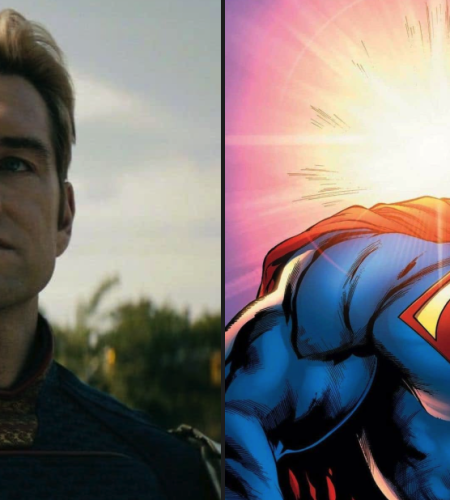
I ran into my homeroom teacher at an extra class, and the guy looked exactly like Frenchie from The Boys, which reminded me that I’ve been following this series but have never actually written anything about it. Coincidentally, I’ve also seen quite a few people criticizing some The Boys fans for comparing Homelander to Superman and claiming that “guys with supernatural powers in real life would turn out like Homelander, not Superman,” so I figured I’d make some content out of Homelander-Superman while I’m at it.
Here, the people who claim that Homelander is realistic while Superman isn’t seem to be basing their argument on the fact that Homelander and Superman both rank first in terms of power within their respective universes, and that the only difference between them that can be used to distinguish the two characters is that Homelander is “realistic” while Superman is “the ideal of humanity.” But personally, I think that it is precisely “power” that distinguishes the two.
Superman’s existence in his own universe is unrivaled. Superman could easily cast aside the emotional bonds he has with humanity to deliberately bring about the apocalypse for the species that once rejected him, or turn them into a bunch of slaves who kneel before him every day and suck on his toes. Superman knows full well that he is capable of doing so, he can envision the outcomes that would follow from the two choices of “doing it” or “not doing it,” and he knows that he has complete freedom to choose between the two options. That is why he chooses “not to do it.” Living as a solitary God day after day brings him no joy, so he chooses to actively form emotional connections with human beings, taking on the role of a savior for living individuals who will one day disappear, in order to find joy and meaning.
Conversely, in terms of power, Homelander is also unrivaled in the universe of The Boys. But because of the emotional shackles that his fathers and mothers created to keep him on a leash and under their control, which bound him to emotional connections with human beings and made him afraid of no longer being loved by everyone, his ability to exercise his power has been significantly diminished. Homelander knows full well that, in theory, he is fucking powerful, but because of his psychological limitations, the throne of an omnipotent God, which he could have easily seated himself upon with his full power, has slipped out of his grasp. The shackles around Homelander’s neck restrict him to the choice of “not doing it,” and almost every instance of his rebellion has been driven by his desire to choose the antithesis of those shackles—to choose “doing it.” Homelander wants to remove those shackles to reach the throne of an omnipotent God, or at least to reach a state where he has the freedom to choose between “being God” and “not being God.” So here, Homelander already has emotional connections with human beings but wants to strip them all away to experience what it is like to be God (the opposite of Superman).
In short, Superman has already reached the summit, and he knows that he can reach the summit, so he doesn’t give a damn about it and leaves the summit to save the humans somewhere down at the foot of the mountain. Homelander, on the other hand, wants to know what it feels like to be at the summit. So the difference between these two characters is not a matter of who is realistic and who is idealistic, but rather a matter of their respective character conditions (power, psychology, etc.) being at two different levels, which means they simply cannot produce the same outcomes.
Subscribe to our email newsletter to get the latest posts delivered right to your email.
Thằng nào bảo nó có sức mạnh như Homelander cũng sẽ hành xử như Homelander thì chẳng khác nào nó tự nhận nó mồ côi và ko đc dạy dỗ đàng hoàng. :))
View on Facebook
镇岳啸天 fact : Homelander ban đầu vẫn là muốn làm việc tốt nhưng môi trường sống như đặc cầu + bị Stillwell mindbreak + được bao che nên mới vậy
View on Facebook
镇岳啸天 Có quyền lực tuyệt đối rất dễ bị sa ngã. Chỉ là người bình thường (quan chức, tỷ phú…) mà đã không biết bao nhiêu người sa ngã rồi.
View on Facebook
Dao TuanDung đúng rồi, có tí tiền vô người đã không thấy mặt đất rồi ấy chứ
View on Facebook
镇岳啸天 Thật ra t nghĩ nếu có năng lực phần lớn sẽ giấu và xài riêng. VD nếu có khả năng đọc ý nghĩ sẽ trở thành 1 nhà đầu tư đại tài, có siêu tốc độ thì đi chơi thể thao các kiểu. Không phải Homelander cũng không phải Superman.
View on Facebook
Bong Nguyen Chuẩn nếu là t t cx làm thế, cứ tự đứng ra làm biểu tượng như Sup hoặc Home xong thấy mình lạc loại vl
View on Facebook
镇岳啸天 vì bạn ko có sức mạnh như homelander thôi 😂
Biết bay, mắt phóng laser, cơ thể bất hoại, mà sống như 1 người bình thường khó lắm. Bản chất con người thôi, có j hơn người là suy nghĩ và hành động khác liền. Ông có trong tay 100 tỷ, chắc chắn quan điểm và cách sống của ông khác hẳn lúc chỉ có 1 tỷ liền.
Con người có j nổi bật, vượt trội, thường có xu hướng "khoe" ra. Nổi bật nhất là khoe giàu có, may mắn. Còn ông có siêu sức mạnh mà phải giấu, vì nếu bị lộ khả năng cao sữ bị đem đi làm thí nghiệm, sẽ dẫn đến ức chế tâm lý ngay.
View on Facebook
Bong Nguyen T cũng cùng suy nghĩ như bạn, thế giới đang yên ổn chỉ cần 1 cá nhân dị biệt xuất hiện thôi là trật tự ban đầu của nó sẽ vô cùng hỗn loạn ^^
View on Facebook
Trần Thành thật ra chỉ riêng lũ mất não thôi, tới lúc bị chính phủ quăng cho quả nuke hay chơi vũ khí sinh học rồi đem trói lại làm vật thí nghiệm thì lại khóc, trung bình những người có siêu năng lực sẽ ẩn đi và làm trong thầm lặng vì họ thừa biết việc này nó nguy hiểm thế nào, nhất là những người có năng lực 👀
View on Facebook
Trần Thành 👀 thì sẽ khác, nhưng ko có gì khẳng định bản thân chắc chắn sẽ biến thành loại bệnh hoạn như thằng Homelander, hiểu ko?
Mẹ, nhiều khi lỡ giết người cái lại trauma tới cuối đời chứ có cái cít mà máu lạnh đc như thế.
View on Facebook
Amargoes Parad mang năng lực như superman thì CP muốn bắt cũng khó. Chỉ có cách duy nhất là bắt gia đình để cưỡng ép thôi
View on Facebook
Trần Thành Ông ơi, chơi vũ khí sinh học mà trúng điểm yếu mình thì chết.
Mà mình tự nộp thì may ra gia đình có thành tích rồi nếu có thể thì còn cứu được mình, chứ trốn là nó diệt hết toàn bộ người mình quen rồi mổ xẻ nát người mình không cho cơ hội sống.
View on Facebook
Amargoes Parad vấn đề là siêu tốc độ thì làm quái có cách nào ném trúng mình đc. Đã thế còn có khả năng lắng nghe tiếng động siêu nhỏ, siêu xa. Nên chỉ có cách duy nhất là bắt người thân thôi.
View on Facebook
Trần Thành xã vô không khí mà chắc gì chính phủ các nước không dám dùng nuke để bắt ông nếu năng lực của ông quá nguy hiểm, tầm của thằng Sup thì như thần gián trần cụ rồi là cả bầy vô đập ông cùng lúc
View on Facebook
View on Facebook
Fan the boys:Homelander mới là thực tế 🗣️🔥🔥🔥
Also Homelander: Nuôi trong lab, xung quanh có các nhân viên giám sát, không được giáo dục đầy đủ, tạo ra như một "sản phẩm" quân sự
Thực tế vcl luôn 🗣️
View on Facebook
Minh Thịnh Đặng bị bắt quả tang lúc quay tay nữa
View on Facebook
Đoạn thực tế nhất trong The Boys mùa 4 chắc ep 6 +7, tôi nhận ra là Homelander cũng khá thực tế đặc biệt là với các fan của Home. Khi mà trong tập 6, lúc Homelander đứng lên nói chuyện với giới tài phiệt, tinh hoa của nước Mỹ. Lúc đầu nghe thì có vẻ rất triết lý, sâu suck, ra vẻ ta đây chống người đồng tính,… xong đến lúc bị giới này hỏi vặn lại thì câm nín, may mà có Neuman gánh cho, không thì anh từ người nhà đất thành người nhà quê rồi.
Homelander đoạn này là đoạn tôi cho là khá thực tế, vì nó cho thấy có sức mạnh về thể lực, nhưng trí lực kém thì cũng mãi chỉ là 1 thằng làm thuê cho Vought thôi. Có lên làm lãnh đạo cũng sẽ chẳng bao giờ lãnh đạo được ai, biết tại sao không ? Vì 1 lãnh đạo giỏi cần khiến cho người ta vừa nể vừa sợ mình, nếu chỉ có nể mà không có sợ thì bạn không có thực quyền, nhưng nếu bạn chỉ làm người ta sợ với cái laze cùng cái tính trẻ con của bạn, thì chẳng sớm thì muộn bạn cũng sẽ bị làm phản thôi.
Stan Edgar nói không sai: Homelander chỉ là 1 sản phẩm lỗi, không phải là 1 vị thần. Qua tập này với tập 7 hy vọng các chúa tể góc cạnh hiểu ra là đời này mà sống ái kỷ, kỹ năng sống, tư duy chính trị, lập luận bằng 0, mồm luôn ra vẻ mình chống woke, sigma male, nhưng đến lúc hỏi cách giải quyết như thế nào, ra làm sao thì không trả lời được, lúc nào cũng như thằng trẻ con khao khát được công nhận thì nó không thực tế đâu, nó chỉ cho thấy bạn là 1 đứa loser và cần đến số 1, Tôn Thất Tùng, Hà Nội hoặc đến 78 Giải Phóng, Phương Đình, Đống Đa để giải quyết mà thôi.
View on Facebook
Câu này thực ra dùng để nhận xét Joker, cơ mà cũng khá đúng với Home và đám fan của hắn:
"Ngươi không là gì cả, ngươi chỉ là 1 ý tưởng ngớ ngẩn mà chỉ có trẻ con mới thấy ngầu. Ta mới chỉ gặp ngươi một lúc thôi và đã có thể chắc chắn rằng thứ duy nhất đúng về ngươi đó chính là sự mông lung
Ngươi chỉ là một kẻ tầm thường trong một bộ trang phục ngớ ngẩn, g.i.ế.t những người vô tội chỉ để chiếm lấy ánh hào quang mà ngươi tưởng tượng.
Không có một khán giả nào đang xem ngươi cả, Joker, không ai ngoài chính ngươi và ngươi rõ ràng cũng đã chán ngán việc này rồi.
Bất kì tay viết nào cũng có thể viết ngươi, bất kì diễn viên nào cũng có thể đóng ngươi, và tất cả những gì họ cần làm là tự tạo lên phiên bản của chính họ và khán giả chắc chắn sẽ vô tay tán thưởng. Nhưng không một ai sẽ tán dương ngươi cả"
View on Facebook
Cơ bản nuôi dạy khác nhau, homelander là thằng mô côi. Sup thì đc nuôi dạy tử tế, ông già nuôi còn hi sinh cả mạng để giấu bí mật cho sup quá đó phản ánh đc giá trị của con người. Còn thằng Homelander thì ngoại trừ hành hạ nó ra có ai làm con mẹ gì với nó đâu mà đòi nó tốt. Thử vừa bắt đc sịp xong nhét vô cái boke rồi thử thuốc xem nó xổng ra có diệt cả lò nhân loại ko :)))
View on Facebook
Lu Dương well, nếu xem phim flash point paradox thì ko nhé, sup còn buồn bã bỏ đi vì lỡ giết người cơ
View on Facebook
Bùi Tuấn Anh có tập hoạt hình của The Boys cũng kể lần đầu tiên Homelander đi làm nhiệm vụ ko kiểm soát đc sức mạnh nên lỡ tay làm con tin bị c.hết. Lúc đó lão cũng hối hận các kiểu mà. Mỗi tội ngay liền sau đó Black Noir đến bao che, báo chí tung tin là do mấy tên tội phạm làm nên Homelander đã méo mó thì còn méo mó hơn.
View on Facebook
Thằng Home là thằng khiếm khuyết về tuổi thơ vs cả tâm hồn nhé nó kh được nuôi dạy như 1 con người bình thường như clark đâu . Thực tế cđb chứ thực tế :))
View on Facebook
Thằng rẻ rách nhà đất được bọn fan so vs anh sịp là vinh dự đời nó rồi :))
View on Facebook
Bạn nghĩ thực tế là Homelander? Nah, thực tế bạn là Metroman, làm điều ác mệt bỏ xừ. Ngồi nhà nghe nhạc mới là thực tế.
View on Facebook
Tran Minh sao có mấy thg hiểu lầm homelander là hình mẫu cho việc khi con người có siêu năng lực r gọi đó là BảN cHất CoN NgƯời:)))) bản chất đéo ai v cả, ngay cả homelander vẫn bị môi trường thí nghiệm tác động đấy thôi. Trừ khi m biến thái vl hay có tuổi thơ bất hạnh r sinh ra thù đời mới giống homelander. Chắc mấy thg đó chưa học qua tâm lý tội phạm 🐧
View on Facebook
Tran Minh nhạc anh có thể như b nhưng ít nhất nó là thứ mà anh tệ và có thể cải thiện đc chứ ko phải từ đầu đã giỏi :))
View on Facebook
Tran Minh riel vcl, Metro man ổng chán quá nên giả chết để về nghe nhạc chill chill :)))))))
View on Facebook
Tran MinhMusicman chứ 🐧
View on Facebook
Nhiều ông nhõi thích tỏ ra deep, hiểu biết hơn người nên cứ bô bô bảo ngoài đời phải như Homelander. Trong khi Homelander vốn là sản phẩm của khoa học, sau đó bị các nhà tâm lý học giỏi nhất thế giới nhồi sọ nên nó mới méo mó như thế. Đứa nào bảo mình sẽ thành Homelander chắc ngoài đời gia đình bất hạnh lắm.
Mà chính trong vũ trụ The Boys cũng đã cho thấy tầm quan trọng của gia đình, người thân ảnh hưởng ntn đến nhân cách mà. Cỡ ăn chơi biến chất như A-train mà còn lo lắng đến gia đình, tác động đến tâm lý để quay xe.
View on Facebook
Vấn đề ở đây là background của 2 thằng khác nhau 1 trời 1 vực. Nhưng k thể phủ nhận Superman là hình tượng Lawful Good lý tưởng hóa
View on Facebook
Nói đến phiên bản "thực tế" của Superman thì tui hay nghĩ đến Superman của Henry Cavill trong Man Of Steel và BVS. Thế giới trong 2 phần phim này gần như phản ánh hoàn hảo thế giới thực với quá nhiều nỗi lo, nỗi sợ và sự hoài nghi. Clark ở thế giới này cũng phải đối mặt với những hoài nghi từ con người, sự sợ hãi từ bạn bè thời niên thiếu, sự mất phương hướng và cũng tự nghi ngờ bản thân. Nhưng nhờ sự nuôi dạy của ông bà Kent và sự hướng dẫn của Jor-el, Clark vẫn giữ được tấm lòng thiện lương để giúp đỡ và hy sinh vì mọi người. Thậm chí khi phải đối mặt giữa lựa chọn phục sinh giống loài – quá khứ đã mất, hay bảo vệ Trái Đất – thứ đang tồn tại, Superman cũng đã chọn Trái Đất. Đấy mới đúng là bản "thực tế" nhất của Sup, chứ không phải thằng điên Homelander, nên mấy thanh niên bảo nếu có sức mạnh thì cũng sẽ như Homelander bớt ảo lại. Đấy là do tư tưởng các bạn lệch lạc, chưa đủ trưởng thành, chưa đủ chín chắn chứ không phải là không thực tế như Superman.
View on Facebook
Homelander được nuôi như 1 con súc vật thì lớn lên nó chả như con súc vật
Còn anh Cường Lác được nuôi dạy như 1 con người tử tế thì lớn lên anh chả thành người tử tế
Hoặc như anh Mark Grayson ấy, cái khoảng thời gian sau khi có sức mạnh của Mark tệ vl, đủ sức biến nhiều người thành ác nhân, nhưng Mark thì sao ? anh ấy vẫn mỉm cười đối mặt và vượt qua nó
View on Facebook
Ng DGphiên bản Sup trong flashpoint do thay đổi timeline mà Sup rơi vào tay chính phủ và bị dùng làm vật thí nghiệm cả đời – Subject 1. Nhưng Sup này vẫn rất thiện lương! Rõ ràng bản chất Sup vốn là tốt! Các phiên bản “xấu” khác như Injustice, Sup Cộng sản, Sup nazi… thì công lý có phần thay đổi chứ bản chất vẫn vì chính nghĩa (trừ mấy thằng như Ultraman vì thằng này đối nghịch hẳn vs Sup).
View on Facebook
Cơ bản thì cả Homelander lẫn Superman đều không thực tế. Người có tâm lí bình thường, có sức mạnh tuyệt đối như vậy, thì thời gian đầu có thể cố bắt chước một trong hai nhân vật, nhưng được một thời gian sẽ thấy mệt mỏi và vô nghĩa. Mình có sức mạnh tuyệt đối mà, tại sao mình cần sự tôn thờ và sự sợ hãi từ những kẻ vốn yếu hơn mình rất nhiều. Chúng nọ sợ mình hay tôn thờ thì cũng đâu giúp gì hay làm hại được gì mình. Nên nếu là mình thì mình sẽ chọn con đường của Metroman (trong movie Megamind) – dành thời gian làm những gì mình thích.
Và mình biết kiểu gì cũng có sẽ có mấy thành phần phán kiểu "Bạn có sức mạnh nhưng không chịu giúp đỡ hay bảo vệ thì bạn là đứa ích kỉ". Vâng, mình lại sợ phán xét của những đứa yếu đuối, hèn nhát muốn người khác hi sinh niềm vui của họ cho niềm vui của bản thân quá cơ. Từ khi nào kẻ yếu có quyền ra lệnh cho kẻ mạnh thế? Từ khi nào mà mặc định niềm vui, niềm hạnh phúc của kẻ yếu thì quan trọng, còn của kẻ mạnh thì không thế? Nếu việc lựa chọn không hi sinh bị đánh giá là "vô nhân đạo", "vô trách nhiệm", thì lựa chọn hi sinh chả khác nào là một sự "bắt nạt của đa số đối với thiểu số". Nếu nghĩ bản thân mình xứng đáng được hạnh phúc, an yên, thì đừng chờ ai dâng cho, tự mình mạnh lên rồi dùng cả tính mạnh để mà nắm lấy đi.
View on Facebook
Chung Phùng Phát Sup nó là kiểu biểu tượng của điều tốt đẹp con người muốn hướng tới, hầu hết các sah đều có góc khuất hoặc 1 điểm xấu, nhưng Sup thì gần như không có. Vốn dĩ ngay từ đầu tạo ra nhân vật Sup các tác giả đã không muốn tạo ra 1 nhân vật "thực tế" mà là một hình tượng truyền cảm hứng để người đọc trở thành phiên bản super của bản thân mà
View on Facebook
Chung Phùng Phát có sức mạnh thi ắt sẽ có cái giá của nó. Ngay cả khi bạn ghét bạo lực và muốn sống một cuộc sống bình thường nhưng đâu ai đảm bảo bạn sẽ yên bình khi sở hữu một năng lực. Chẳng ai sinh ra đã làm anh hùng cả, cuộc chiến của bạn là để bảo vệ những người thân của bạn, nhờ vậy họ gọi bạn là “anh hùng”
View on Facebook
Bản chất là do quá mạnh quá thông minh, nên Cường Lác giác ngộ và ghét chiến tranh luôn mà
View on Facebook
Del có sức mạnh thì t làm Metroman hoặc lén dùng năng lực để trục lới kiếm tiền thôi, hơi đâu phải đi kill người vô tội vạ hoặc làm người tốt làm gì
View on Facebook
Carnet De Spectrum đến lúc nào đó tiền bạc không còn là thứ thoả mãn bạn nữa. Con người mà
View on Facebook
Huy Nguyen Thì t chỉ cần sống bth như ông Metroman thôi, ai rảnh đâu đi kill người vô tội vạ làm gì. Thằng Home đầu óc nó ko bth mới thế thôi người thường thấy phiền bm
View on Facebook
Kick A.ss mới là đứa anh hùng thực tế nhất, mặc bộ đồ bó hành hiệp xong ra đường bị đấm như con bởi 3 thằng giang hồ.
View on Facebook
Superman chưa bao giờ cần "thực tế" hay quan trọng sự "thực tế" trọng câu truyện cả. Sup là biểu tượng của điều tốt đẹp con người muốn hướng tới, hầu hết các sah đều có góc khuất hoặc 1 điểm chưa tốt trong tính cách. Nhưng Sup thì gần như không có.
Vốn dĩ ngay từ đầu tạo ra nhân vật Superman các tác giả đã không muốn tạo ra 1 nhân vật "thực tế" mà là một hình tượng truyền cảm hứng để người đọc trở thành phiên bản super của bản thân mà thôi.
Homelander chỉ là một phiên bản Parody méo mó của Sup, nhờ sự thành công của The Boys một số người quay ra so sánh muốn Sup cx phải méo mó đi để "thực tế" hơn "con người" hơn=)))
View on Facebook
Homelander là "một mặt xấu của thực tế", nơi sức mạnh có thể rơi vào một kẻ thiếu thốn tình thương, loạn trí, chứ không phải "toàn bộ thực tế", thực tế hoàn toàn có thể có Superman, nơi sức mạnh được nuôi dưỡng tử tế, cẩn thận – khác biệt lớn nhất của 2 nhân vật là cách được nuôi dưỡng và giáo dục. Đứa nào bảo mặc định siêu anh hùng có thật phải giống Homelander thì cũng chỉ là 1 cái nhìn tiêu cực thiển cận.
View on Facebook
Homelander và Superman là kết quả, không phải bản chất.
Một đứa là sản phẩm phòng thí nghiệm và nuôi dạy không bình thường, đứa còn lại được học những điều tử tế từ nhỏ thì chắc chắc phải khác nhau rồi.
Cái này được nêu rõ trong các bộ phim nặng về tâm lý tội phạm luôn, tức là hành động hiện tại được nuôi dưỡng bởi những gì mà người đó từng trải qua ở quá khứ.
View on Facebook
Đừng so sánh homelander vs sup, k cùng đẳng cấp, nó khiến cái văn của ông thêm ngu đi đấy, thà đem sup trong injustic hay sup boyprime còn hợp lý
View on Facebook
Satomi Shintarou À bài này tôi đang phản đối việc coi Homelander là phiên bản thực tế của Superman aka coi sự khác biệt chia cách hai nhân vật này dù có cùng vị thế với quần chúng trong vũ trụ của mình là Homelander là thực tế còn Superman thì là lý tưởng nhé ông.
Còn về việc bảo không so sánh vì không cùng đẳng cấp thì tôi không đồng ý với ông nhé.
View on Facebook
Không phải là bản chất mà chỉ là mong muốn ích kỷ thôi, home có thể tự do bộc lộ bản chất, tung hô, không bị gò bó thứ gọi là trách nhiệm. Giống như chúng ta còn trẻ chơi bời, đánh nhau không chịu trách phạt gì từ xã hội.
Còn sup gánh nặng về trách nhiệm, sức mạnh, cô đơn, mong muốn cs người bth,… Tất cả làm nên biểu tượng hy vọng. Giống như người lớn lập gia đình có trách nhiệm chăm sóc, kiếm tiền, đối mặc khó khăn bản thân.
View on Facebook
Hancock lặng lẽ nhìn và câm nín
View on Facebook
Còn một so sánh thú vị hơn đó là phiên bản creepy của Sup trong phim Brightburn
View on Facebook
Hải Đăng vẫn có bố mẹ, nhưng bị bắt nạt ở trường. Thằng này thuần ác
View on Facebook
Bạn nghĩ y hệt tôi nếu tôi KHÔNG đọc bất cứ 1 đầu truyện tranh nào về Superman =))). Đơn giản thôi, không phải đỉnh cao hay cái gì hết. Superman đơn giản là 1 NGƯỜI tốt muốn làm chuyện tốt khi có sức mạnh chứ cái gì mà đỉnh cao, cô đơn, chúa trời ? Xem xong ba cái phim của thằng Snyder xong đánh giá vậy à ?
View on Facebook
Sinh ra và lớn lên ở VN, từ bé đã đc nghe 5 điều Bác Hồ dạy, biết bao anh hùng dân tộc, bao cuộc kháng chiến chống giặc, xong lên mạng kêu "ai có quyền lực/sức mạnh cũng như Homelander" =))))
View on Facebook
Đức Trung Thật ra hai đối tượng so sánh ở khía cạnh này thì chênh lệch quá nhiều kể cả khi xét trên bối cảnh của mỗi bên, không có một tí tị tì ti điểm chung gì để so luôn á bạn:))).
View on Facebook
Hạ Linh Home với Sup cũng chả xa đến vậy. Sức mạnh tuyệt đối thì các vị vua cũng có, nói một câu có thể đi cả họ =)))) Và tất nhiên có vua tốt vua xấu. Quyền lực chỉ thả phanh bản thân thôi, chứ chả quyết định tốt xấu. Người tốt sẽ làm được nhiều việc tốt hơn. Người xấu sẽ làm đc nhiều việc ác hơn
View on Facebook
Đức Trung Tôi bảo là xét trên bối cảnh/ vũ trụ của hai bên thì ví dụ anh hùng dân tộc với Home nó không có ý nghĩa vì về cơ bản anh hùng dân tộc họ chỉ dừng vì sức của họ chỉ đủ để làm đến thế— chống được giặc chứ không toàn năng như Homelander đối với dân chúng của nó. Còn so sánh vua như bây giờ thì hợp lý hơn.
View on Facebook